In front of the imposing old building of Berlin’s Technical University, the market lay like an inventory opened out along the Straße des 17. Juni, stretching away from the Charlottenburg Gate. Cardboard boxes full of Soviet-era coins, little pocket-sized books, editions of the Communist Manifesto, bluish, oxidised reliefs through which the figures of saints faintly showed.
“Saint Nicholas!” the vendor called out. “That’s Saint Nicholas. A hundred and eighty euros. These pieces are over a hundred and fifty years old. From the time of the tsars.” I nodded, moved on and looked down the market towards the Siegessäule, when the wind turned and carried over the smell of frying oil from a sausage stand a few metres away. “It’s a genuine icon from Russia!” he said, and I thanked him again, making it clear that I wasn’t interested. The Charlottenburg Gate, with its ornaments and bronze statues of Friedrich I and Sophie Charlotte, presided over a shanty town of folding tables and boxes.
“All that is solid melts into air, all that is holy is profaned,” reads the Communist Manifesto. What had once been beyond question now lay on the tables as second-hand goods. The price was negotiable. “For you, a hundred and fifty,” he called after me.
As soon as we entered the concert hall in Zurich, I noticed how many people were speaking Russian or Ukrainian. Perhaps it was because Shostakovich was being performed that so many of them had come that evening. They sat together, listening to music. For a moment, it occurred to me how fundamental this simple activity was, and how easily one could overlook it.
The music began quietly, with a few tentative notes. The strings passed the melody from one to another, carrying it forward until their voices suddenly collided, breaking into sharp, almost violent bursts of sound. Then silence, followed by a few isolated notes, a melody emerging only to be interrupted again. Of great beauty. Without consolation. And yet uplifting.
Yves had already warned me before the concert that there was a chance he might fall asleep. After about thirty minutes, I noticed his head tilting slightly forward. It kept sinking a little further, until he jerked it upright again with a small, abrupt movement. My gaze drifted away from the back of his head and wandered across the hall. Everywhere, small groups of people sat listening intently to the music. An elderly woman had tears in her eyes. A man I had already noticed at the entrance, where he had surveyed the foyer with wide-open eyes and a strangely motionless expression, was now staring at the stage with the same frozen look on his face.
Two children were sitting in chairs far too large for them. While one imitated the movements of a conductor with his arms, the other rested his head against the back of his chair, looking down at the floor with a melancholy expression. Eventually, the movement came to an end. The entire audience immediately began to applaud. The child raised his head and looked at me. I turned around. Yves, having just woken from his sleep, sat up straight and joined in the applause.
The chirping of a cricket over the rumble of a passenger ship’s engine.
Alissa’s and Meghan’s voices drift somewhere in between. Their words settle into the soundscape like leaves falling onto a street.
I’m just pulling into Friedrichshafen. Although the town is set in an idyllic landscape, it bears witness to an incredibly staid and ugly post-war architecture. Its inhabitants seem to be a mixture of snooty Badeners and refugees.
What must it have been like in 1945, when the little harbour town was razed to the ground? Did the farmers of Thurgau stand on the opposite shore of the lake, marvelling at the immense explosions and clouds of smoke rising from Germany?
Airports. Motorways.
Places not designed for lingering.
Places shaped by speed.
No human body is meant to be there.
Don’t be certain of who you are.
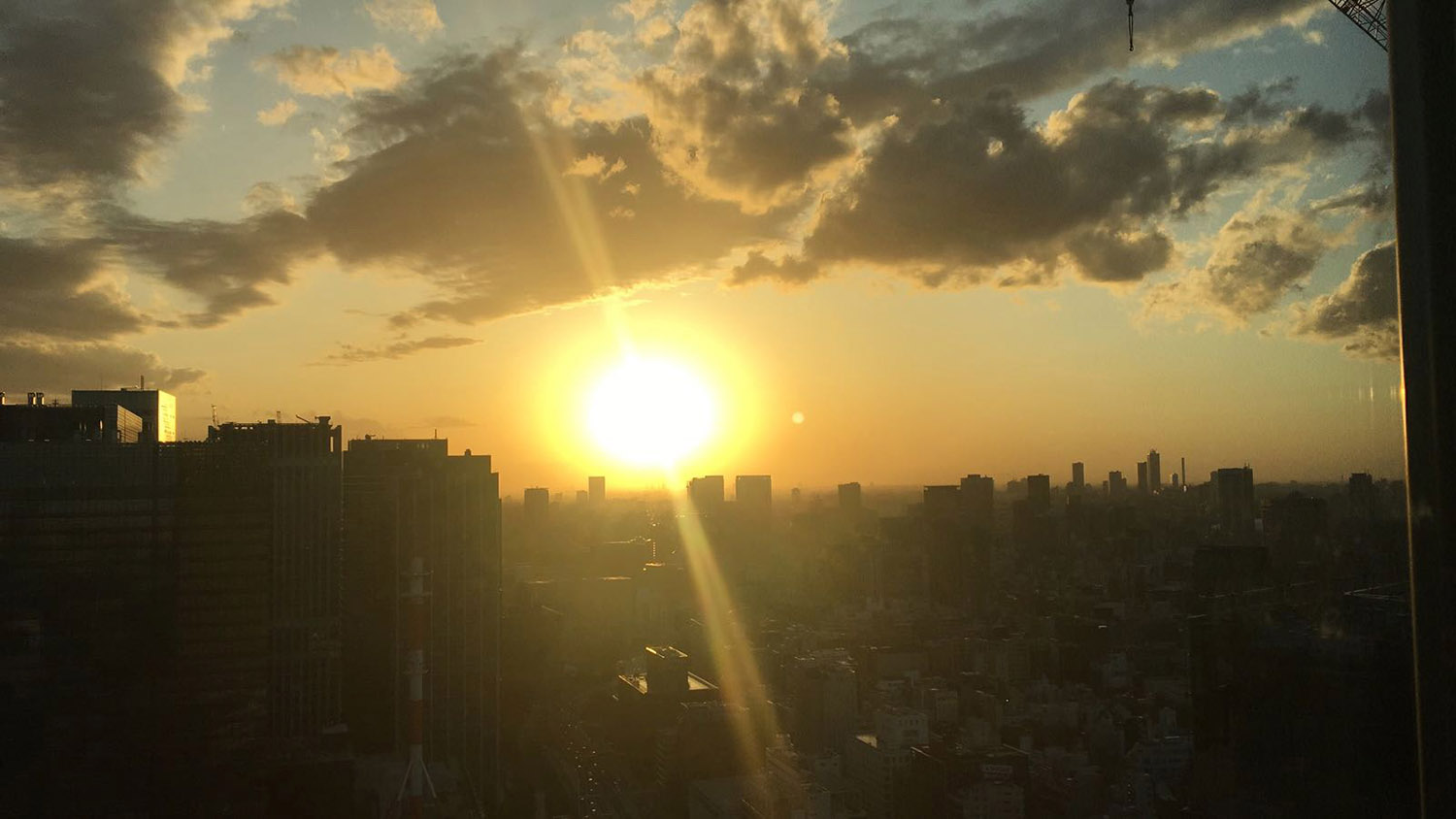
Most of the time, the clouds over Zurich are oppressive and dense. Sometimes, however, they begin to fray, and light breaks through in places.
The struggle to resist the impulse of sin.
It is the process of theosis.